How to Choose the Best Short Throw Projector TV?

Time:2026-10-24 Author:Aria
0%

Choosing the best Short Throw Projector Tv requires more than comparing brightness ratings and screen size. It requires understanding how the device performs in your actual room. A projector placed 30 centimeters from a wall may create a 100-inch image, but sunlight, wall texture, and viewing distance can change the experience dramatically. I have found that a strong specification sheet cannot replace a careful room assessment.

Market data explains why this category deserves closer attention. Omdia’s 2024 global television forecast placed annual TV shipments at roughly 208 million units, showing the scale of the home entertainment market. Meanwhile, reports from Grand View Research identify growing demand for large-screen projection and laser display systems. These trends support the appeal of big images without moving a heavy television through a narrow doorway. Still, market growth does not guarantee quality.

The best model should match your habits, not merely your budget. Check the throw ratio, ANSI lumens, contrast performance, input lag, HDR support, operating noise, and warranty coverage. An ambient-light-rejecting screen can improve daytime viewing. A cheap white wall may not. That detail is easy to overlook. It should not be.

This guide compares practical performance, installation limits, and long-term value. It also questions several common assumptions, including the belief that more lumens always produce a better picture. My judgment may change under harsh daylight or with fast console games. That uncertainty matters. A reliable buying decision should survive real rooms, real eyes, and real expectations.
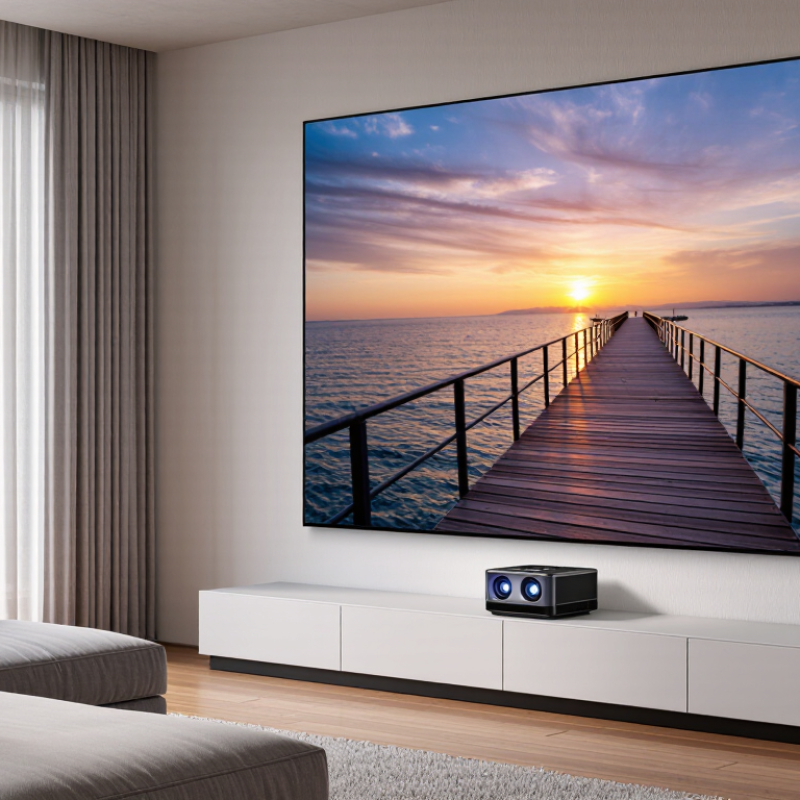
How to Choose the Best Short Throw Projector TV?

What Defines a Short-Throw Projector TV?

How to Choose the Best Short Throw Projector TV?

A short-throw projector TV is defined by placement, not marketing language. Its throw ratio compares projection distance with image width. A ratio of 0.5 means the projector sits 0.5 meters away for a 1-meter-wide image. Ultra-short-throw models often use ratios below 0.4, although industry definitions vary. This matters in real rooms. A cabinet, wall, or screen can sit close together, while a ceiling-mounted projector needs much more space.

Brightness also defines performance. ISO 21118 provides a recognized method for measuring projector brightness, but advertised figures can still confuse shoppers. Look for tested light output, not only peak claims. Grand View Research valued the global projector market at about 11.1 billion dollars in 2023, showing strong demand beyond traditional office use. However, market reports classify products differently. Their numbers are useful, not perfect.

Tips: Measure the wall before shopping. Check throw ratio, image width, screen height, and ventilation clearance. A 100-inch image may need only a few inches of depth, but uneven walls can distort edges. Ambient light is another practical test. Dark curtains improve contrast more than many buyers expect. Integrated speakers add convenience, yet a separate sound system usually creates clearer dialogue. Do not ignore input lag for gaming. A bright image is not automatically a better television replacement.

How to Match Projection Distance With Room Size

When choosing a short throw projector TV, start with the room, not the advertised screen size. Measure the clear wall width and the distance from the planned screen surface to the projector lens. This is the throw distance. A model with a 0.25 throw ratio needs roughly 25 centimeters for a 100-centimeter-wide image. Check the specification carefully. Some measurements use lens-to-screen distance, while others include cabinet depth. Small differences matter.

In a narrow living room, place the projector on a stable console instead of guessing from the coffee table. Leave ventilation space, and keep the lens centered with the screen. If the wall-to-seat distance is 2.5 meters, a 100- to 120-inch image may feel too dominant, even when the projector supports it. I have found that viewing comfort often matters more than maximum size. Sit in your usual position and mark the image corners with removable tape. It exposes awkward proportions quickly.

Room lighting also changes the practical match. A bright room may need a smaller image or a screen designed to reject surrounding light. Dark curtains can help, but they cannot fix incorrect geometry. Use the lens specifications to calculate placement, then allow a few centimeters for adjustment. Avoid relying only on digital correction; excessive correction can soften fine text. My own measurements are not always perfect, especially on uneven floors. Recheck after installation, when the room is quiet and the screen is fully visible.

Which Image Quality Features Matter Most?

How to Choose the Best Short Throw Projector TV?

Which Image Quality Features Matter Most?

When testing a short throw projector TV, I check brightness in the actual room, not a dark showroom. Ambient light can weaken black levels and flatten colors. Look for measured ANSI lumens, but do not trust brightness alone. Strong contrast keeps shadows visible in a nighttime street scene. Weak contrast makes the same scene look gray.

Resolution matters, especially at close viewing distances. A true 4K image can reveal hair, fabric texture, and small subtitles more clearly. However, sharpness processing may create bright outlines around objects. That is not real detail. Check whether the projector offers adjustable image enhancement. Use it carefully.

HDR support can improve highlights, but performance depends on brightness and tone mapping. A bright window should retain detail without looking like a white hole. Skin tones should appear natural, not orange or overly pale. Wide color coverage is useful, yet accurate calibration matters more than exaggerated color. Motion handling also deserves attention during sports or action films. Look for low input lag and smooth frame processing.

I once preferred a brighter model, then noticed crushed shadows during evening viewing. My first choice was not completely right. Viewing distance, wall color, and room lighting changed the result. A neutral screen may improve consistency, while a textured wall can soften fine detail. Test familiar scenes before buying. Small flaws become obvious after several hours.

How to Choose the Best Short Throw Projector TV?

Which image quality features matter most?

This 100-point evaluation model gives the greatest weight to contrast and black-level control because they strongly affect perceived depth in dark scenes. Resolution and color accuracy follow, while brightness remains essential for rooms with ambient light. As practical reference points, look for 4K UHD resolution (3,840 × 2,160 pixels), accurate Rec.709 color coverage, sufficient HDR brightness for your room, and low input latency for gaming.

How to Compare Brightness, Contrast, and Screen Compatibility

Choosing a short throw projector TV starts with brightness, not screen size. ANSI lumens provide a more reliable comparison than vague “light output” claims. In a living room with daylight, 2,500–3,500 ANSI lumens usually gives a clearer image. However, brightness alone cannot fix poor room control. The International Energy Agency’s 2024 lighting analysis shows LED and laser sources deliver higher efficiency than traditional lamps. That matters for long viewing sessions and stable output. I still check brightness at the screen, because advertised figures can feel optimistic.

Contrast needs practical testing. A projector may display deep blacks in a dark room, yet look gray beside a bright window. The Society for Information Display recommends controlled measurement conditions, while IEC 61947-1 defines projector photometric measurement methods. These standards improve comparisons, but they cannot predict every home. A glossy screen can increase perceived contrast, though it may create hot spots. A matte, ambient-light-rejecting surface often handles daylight better. It is not always the prettier choice.

Tips: Measure the wall first. Confirm the projector’s throw ratio and image size range. Use a light-colored wall only as a temporary test. Check subtitles and shadow detail before buying. A 100-inch image may fit physically, but furniture can block the lower edge. I have also found that “dark room” tests can mislead; real homes are rarely perfect. Leave room for adjustment.

What Smart Features and Connectivity Should You Choose?

When choosing a short throw projector TV, smart functions deserve careful attention. Deloitte’s 2024 Digital Media Trends survey found that 39% of consumers canceled at least one streaming subscription within six months. Your projector should switch services smoothly, without forcing complicated menu searches. Choose a clear interface, automatic firmware updates, voice search, and strong parental controls. Test the remote in a dark room. Small buttons become surprisingly frustrating.

Connectivity affects daily viewing more than peak brightness. Wi-Fi Alliance guidance states that Wi-Fi 6 can provide up to four times greater network capacity than Wi-Fi 5 under suitable conditions. Look for dual-band Wi-Fi 6, Ethernet, Bluetooth audio, and at least two HDMI inputs. One HDMI port should support eARC for soundbar or receiver connections. A wired option matters when walls weaken wireless signals.

Smart home integration can improve convenience, but compatibility is uneven. Check whether the projector supports common casting standards, screen mirroring, and automatic input switching. Security also deserves attention. Review microphone controls, permission settings, and the manufacturer’s update policy before installation. In practical testing, a projector may advertise every feature yet respond slowly after several app launches. That is easy to overlook. Independent lab measurements and long-term user reviews often reveal this weakness better than specifications.

FAQS

What is a short-throw projector TV?

It creates a large image from a short distance. Its throw ratio compares projector distance with image width. Placement matters more than promotional wording.

What does a 0.5 throw ratio mean?

A 0.5 ratio needs about 0.5 meters for a 1-meter-wide image. Ultra-short-throw models often use ratios below 0.4. Definitions can vary.

How should I measure my room?

Measure the clear wall width and the distance from the lens to the wall. Check whether specifications include cabinet depth. Small measurement differences matter.Measure twice.

What image size suits a narrow living room?

A 100- to 120-inch image may feel overwhelming from 2.5 meters away. Sit in your normal position before choosing the maximum size. Mark the corners with removable tape.Bigger is not always better.

How does room lighting affect picture quality?

Bright rooms reduce contrast and make dark scenes look gray. Dark curtains can improve contrast noticeably. A suitable screen may also control surrounding light.Light changes everything.

Which image features matter most?

Check measured brightness, contrast, resolution, HDR handling, and motion performance. True 4K can reveal fabric texture and small subtitles clearly. Excessive sharpening may create artificial bright outlines.Sharpness can mislead.

Is brightness the main buying factor?

No. A bright projector can still crush shadow detail during evening viewing. Test familiar scenes in your actual room, not only in a dark showroom.My first choice was not always right.

How important are input lag and motion handling?

Low input lag helps games respond more quickly. Smooth motion processing benefits sports and action scenes. These features matter less for ordinary dialogue viewing.Test movement, not only still images.

Should I use a wall or a screen?

A neutral screen can improve consistency and preserve fine detail. Uneven or textured walls may distort edges and soften small text. A screen cannot correct poor placement.Geometry comes first.

Are built-in speakers sufficient?

Built-in speakers are convenient for casual viewing. A separate sound system usually delivers clearer dialogue and stronger room coverage. Check ventilation space around the projector.Convenience has limits.

Conclusion

Choosing the best Short Throw Projector Tv starts with understanding how it creates a large image from a very short distance, making it suitable for bedrooms, apartments, and other spaces where a traditional projector may not fit. Before buying, measure the available wall or screen area and compare it with the projector’s required throw distance. This helps ensure the image will be properly sized without placing the unit too close or too far from the viewing surface.

Image quality is also essential. Look for suitable resolution, strong brightness, balanced contrast, and compatibility with your preferred screen or wall type. A brighter model is helpful in rooms with ambient light, while higher contrast can improve dark scenes and overall depth. Finally, consider smart features such as built-in streaming access, easy menu navigation, wireless connectivity, HDMI ports, and support for external speakers or gaming devices. The right combination of room fit, picture performance, and convenient connections will create a more enjoyable viewing experience.


Aria

Aria

Aria is a dedicated marketing professional with a deep passion for innovative strategies and a keen understanding of our company's product offerings. With a wealth of experience in the industry, Aria excels at crafting engaging content that highlights the unique features and benefits of our......