Choosing a Digital Movie Theater Projector is not simply a brightness contest. It is a decision about screen size, viewing distance, operating cost, content compatibility, and audience comfort. A dim image can flatten a dramatic night scene. Excessive brightness can make skin tones look harsh. The right model should also support reliable playback, quiet operation, and consistent color across long screenings.
The Motion Picture Association’s 2023 THEME Report recorded approximately $33.9 billion in global theatrical box office revenue. That figure confirms cinema’s continuing commercial value, although recovery remains uneven across regions. Grand View Research also identifies laser projection as a major growth area within professional cinema equipment. Laser light sources can reduce lamp replacements and maintain steadier brightness. However, “maintenance-free” is an exaggeration. Filters, cooling systems, calibration, and software still require attention.
Michael Karagosian, president of MKPE Consulting, has emphasized, “The projector is only one part of the cinema experience.” That warning matters. A powerful Digital Movie Theater Projector cannot repair poor acoustics, a badly designed screen, or careless installation. This guide compares seven leading options through practical criteria, including resolution, contrast, laser longevity, HDR readiness, service support, and total ownership cost. It also considers smaller venues, premium theaters, museums, and private screening rooms. Some rankings may change as manufacturers release newer models. That is the uncomfortable part. Specifications alone rarely predict real-world performance. A projector that looks perfect on paper may disappoint in a bright lobby or poorly ventilated booth.
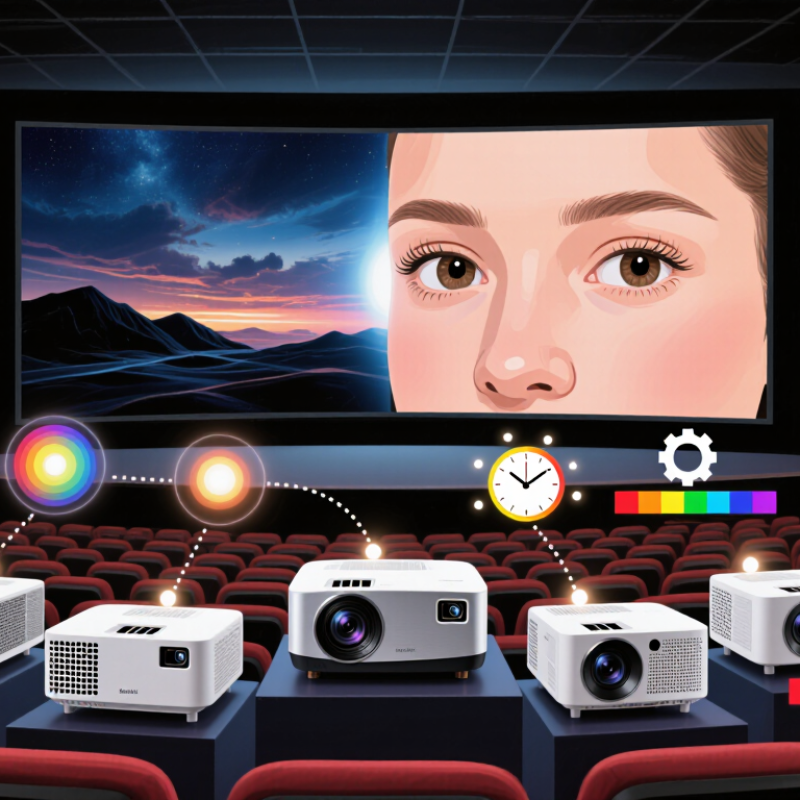
A digital movie theater projector is built for consistent, large-scale image delivery, not casual living-room viewing. In my experience, the strongest models combine high-resolution imaging, stable brightness, accurate color, and dependable cooling. Resolution matters, but it cannot rescue poor contrast or uneven screen illumination. A well-tuned 4K projector can still look disappointing when the lens is mismatched to the auditorium.
The seven best digital movie theater projectors should support professional cinema standards, including secure content handling and reliable playback integration. Brightness must suit the screen size, viewing distance, and room design. Excessive brightness may flatten black levels, while insufficient brightness makes dark scenes lose detail. Laser illumination usually offers steady output and reduced lamp replacement, although its service costs can be higher. Check the rated operating hours carefully. Marketing figures are not always practical measurements.
Installation flexibility also defines a serious cinema projector. Interchangeable lenses, precise alignment controls, quiet operation, and automated monitoring reduce daily problems. Technicians should inspect dust protection, ventilation, calibration tools, and local service support before buying. I would not choose a projector from specifications alone. Real auditorium tests reveal color shifts, fan noise, and motion artifacts that brochures often overlook. Some models appear excellent on paper but require more calibration than a small theater team can manage.
Brightness, resolution, and contrast decide whether a theater image feels cinematic or merely large. For brightness, do not trust the advertised lumen number alone. ISO 21118:2020 requires controlled measurement conditions, yet real performance changes with lamp age, screen size, lens choice, and screen gain. The DCI Digital Cinema System Specification targets about 14 foot-lamberts on the screen. A projector may appear bright in a showroom but look weak across a wide, matte screen. Measure brightness at the audience position, not only at the lens.
Resolution should match seating distance and screen width. DCI defines 2K as 2048 × 1080 pixels and 4K as 4096 × 2160 pixels. On a small screen, viewers may not notice the difference. On a large screen, fine textures and subtitles expose lower resolution quickly. Contrast is harder to compare. ANSI contrast measures bright and dark areas together, while dynamic contrast can use changing lamp or iris settings. Deep blacks need more than a high specification. They need a dark room, controlled reflections, and accurate calibration. I have seen impressive numbers produce gray shadows.
Tips: Compare projectors using the same screen, lens, test pattern, and viewing distance. Check center and corner brightness. Ask for measured ANSI contrast, not only a dynamic figure. Leave headroom for brightness loss. A perfect specification sheet can still disappoint. Review maintenance records, calibration support, and noise levels before buying.
Seven leading digital movie theater projectors deserve attention for different screening environments and budgets. A 2K laser projector offers dependable brightness for small theaters. A 4K laser model reveals fabric texture, facial detail, and subtle shadows more clearly. An RGB laser projector delivers a wide color range and stable light output. A phosphor laser projector can reduce maintenance while preserving consistent brightness. A high-contrast cinema projector suits dark rooms with demanding dramatic films.
Two other choices also deserve consideration. A compact digital cinema projector fits boutique venues with limited booth space. A high-brightness projector works better in large auditoriums with wide screens. Brightness alone is not enough. Lens quality, screen gain, contrast, cooling design, and installation alignment affect the final image. A projector may look impressive in a showroom but appear flat after installation.
Professional buyers should request measured brightness, color calibration data, and compatibility with approved cinema formats. Check the projector at the intended throw distance, not only through a product sheet. Listen for fan noise during a quiet scene. Also inspect shadow detail in a night sequence. Laser light sources usually reduce lamp replacement, yet repairs can still be expensive. Some advertised specifications feel optimistic. Careful testing remains necessary.
| Projector | Recommended Venue | Native Resolution | Light Source | Maximum Brightness | Imaging Technology | Approx. Contrast | Key Advantage |
|---|---|---|---|---|---|---|---|
| Projector 1 | Large-format premium cinema | 4096 × 2160 (4K) | RGB laser | Up to 45,000 lm | 3-chip DLP | Approximately 2,500:1 | High brightness with wide color-gamut capability |
| Projector 2 | Large multiplex auditoriums | 4096 × 2160 (4K) | Laser phosphor | Up to 40,000 lm | 3-chip DLP | Approximately 2,500:1 | Strong balance of 4K detail, brightness, and operating efficiency |
| Projector 3 | Medium-to-large cinema screens | 4096 × 2160 (4K) | Laser phosphor | Up to 35,000 lm | 3-chip DLP | Approximately 2,200:1 | Reliable 4K performance for demanding commercial installations |
| Projector 4 | Large conventional auditoriums | 2048 × 1080 (2K) | Xenon lamp | Up to 33,000 lm | 3-chip DLP | Approximately 2,400:1 | Proven digital-cinema platform with high screen illumination |
| Projector 5 | Mid-size commercial theaters | 2048 × 1080 (2K) | Laser phosphor | Up to 22,000 lm | 3-chip DLP | Approximately 2,000:1 | Lower routine maintenance than lamp-based systems |
| Projector 6 | Small and medium auditoriums | 2048 × 1080 (2K) | Laser phosphor | Up to 15,000 lm | 3-chip DLP | Approximately 2,000:1 | Efficient choice for standard-sized screens and daily operation |
| Projector 7 | Premium medium-size theaters | 4096 × 2160 (4K) | Laser | Up to 15,000 lm | 3-chip SXRD | Approximately 5,000:1 | High native resolution and strong perceived contrast |
Brightness figures are maximum published values and may vary by operating mode, lens, screen size, and installation conditions.
7 Best Digital Movie Theater Projectors to Buy
Which Projector Fits Different Theater Sizes and Budgets
Room size should guide the purchase more than resolution alone. SMPTE RP 431-1:2009 recommends about 14 foot-lamberts for standard cinema presentation. A dim 4K image still disappoints. For rooms under 100 seats, a compact 2K laser projector usually offers sensible value. A short-throw laser model suits narrow rooms and screens below 120 inches. A budget 4K laser model adds sharper subtitles and cleaner textures. Prices often range from about $2,000 to $6,000.
Medium theaters need more brightness and stronger lens flexibility. A 6,000–10,000-lumen 4K projector can suit screens from 150 to 250 inches, depending on room gain and ambient light. A dual-laser option may cost $8,000–$20,000, but it reduces lamp replacement and brightness decline. A high-contrast cinema model benefits dark rooms with black walls and controlled aisle lighting. The DCI Digital Cinema System Specification defines demanding requirements for image quality, security, and playback reliability.
Large venues need specialized equipment. A 10,000–20,000-lumen 4K projector fits screens above 250 inches, while a stacked configuration can support premium presentations. A high-frame-rate model helps action scenes appear smoother. A rental-focused model adds rugged transport features for temporary theaters. Seven choices sound generous. Budget reality is less generous. Installation, lenses, calibration, cooling, and electrical upgrades can add thousands. I would not trust the brightness printed on the box alone. Measure the screen, test the lens, and check brightness after calibration. The wrong throw distance remains an expensive mistake.
Typical projector price, brightness, and theater-size planning ranges without using brand-specific data.
Compact home theaters generally work well with 2,500–3,000 ANSI lumens and screens up to about 2.5 meters wide. Small screening rooms typically need 5,000–7,000 ANSI lumens, while community and large-format theaters may require 10,000–15,000 ANSI lumens. Prices are representative midpoints in U.S. dollars for planning purposes; installation, lenses, media servers, screens, and maintenance are not included.
It is designed for steady, large-screen delivery and long operating periods. It needs stable brightness, accurate color, reliable cooling, and professional playback integration. Home viewing is different.
Match brightness to screen size, viewing distance, room design, and screen gain. Measure light from the audience position. Do not trust the advertised lumen figure alone. A wide matte screen may look dim.
No. Excessive brightness can weaken black levels and make images look flat. Insufficient brightness hides detail in dark scenes. Balance matters more than maximum output. Too bright can hurt.
Choose according to screen width and seating distance. 4K reveals fine textures, facial details, and subtitles more clearly on large screens. Viewers may notice little difference on smaller screens. Resolution cannot fix poor contrast.
Strong contrast helps preserve black shadows and subtle details. A high specification may still produce gray-looking darkness. Room reflections, calibration, and screen quality affect real contrast. Numbers can mislead.
Laser illumination usually provides steady output and fewer lamp replacements. Phosphor laser systems may reduce routine maintenance. RGB laser systems can offer a wider color range. Service costs may still be high.
Check interchangeable lenses, alignment controls, ventilation, dust protection, and cooling design. Quiet operation matters during silent scenes. Automated monitoring can reduce daily problems. Small teams need manageable calibration.
Test it with the intended screen, lens, throw distance, and viewing position. Inspect center and corner brightness. Watch a night scene for shadow detail. Listen during quiet moments. Real testing exposes flaws.
Choosing the right Digital Movie Theater Projector requires more than selecting the brightest or most expensive model. This guide explains what defines a professional cinema projector, including its light output, image resolution, contrast, color accuracy, reliability, and compatibility with modern theater systems. It also outlines how to compare these specifications in practical terms, helping readers understand how projector performance affects picture quality in different viewing environments.
The article reviews seven leading types of digital movie theater projectors and considers which options are best suited to small private rooms, medium-sized screening spaces, and large commercial theaters. It also discusses budget planning, screen size, room lighting, installation requirements, ventilation, calibration, lamp or light-source replacement, cleaning, warranty coverage, and long-term maintenance. By considering both technical performance and ownership costs, readers can make a confident decision and select a projector that delivers a bright, detailed, and consistent cinematic experience.

Youxi projector